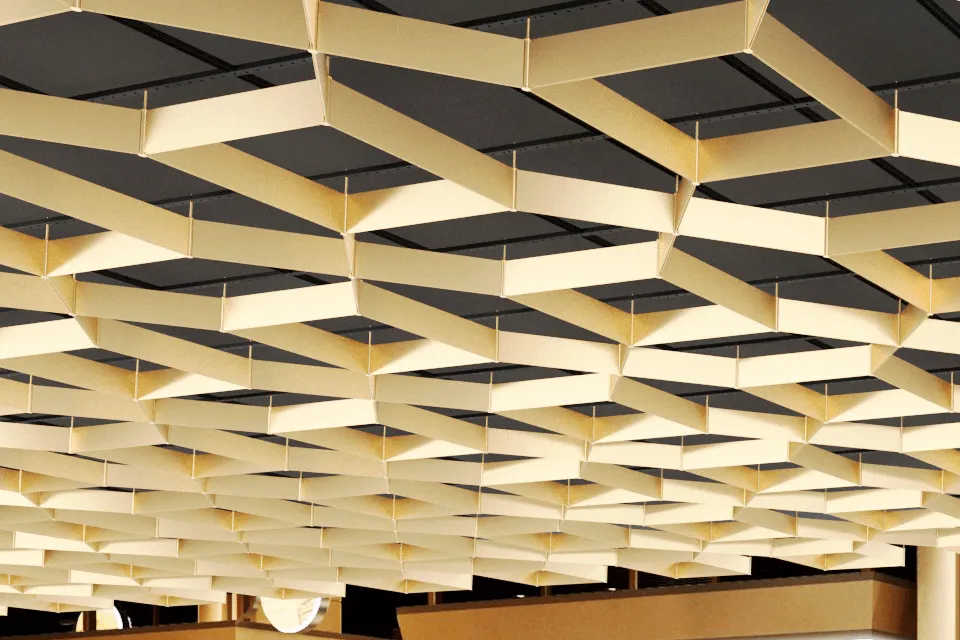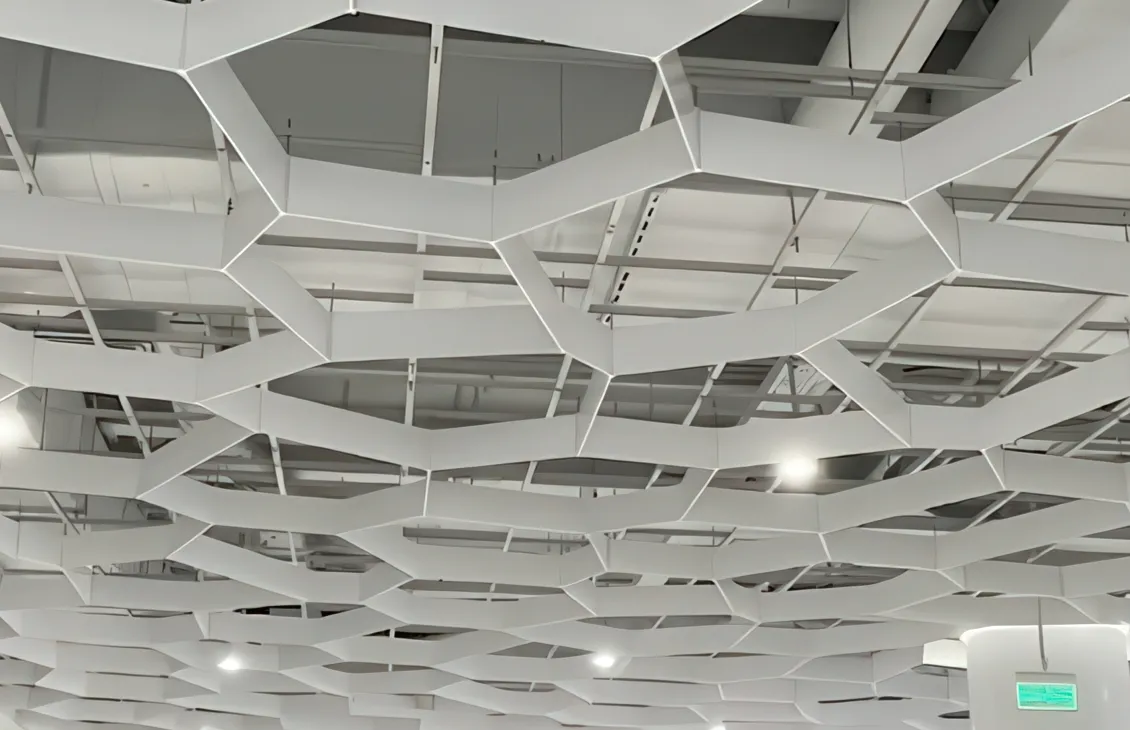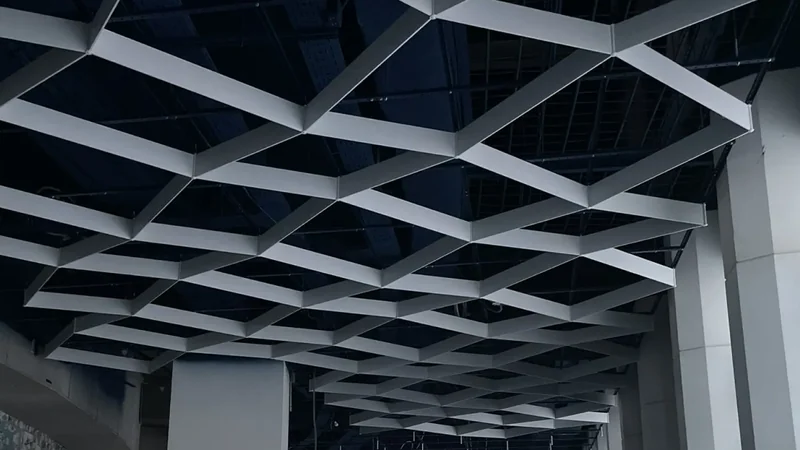
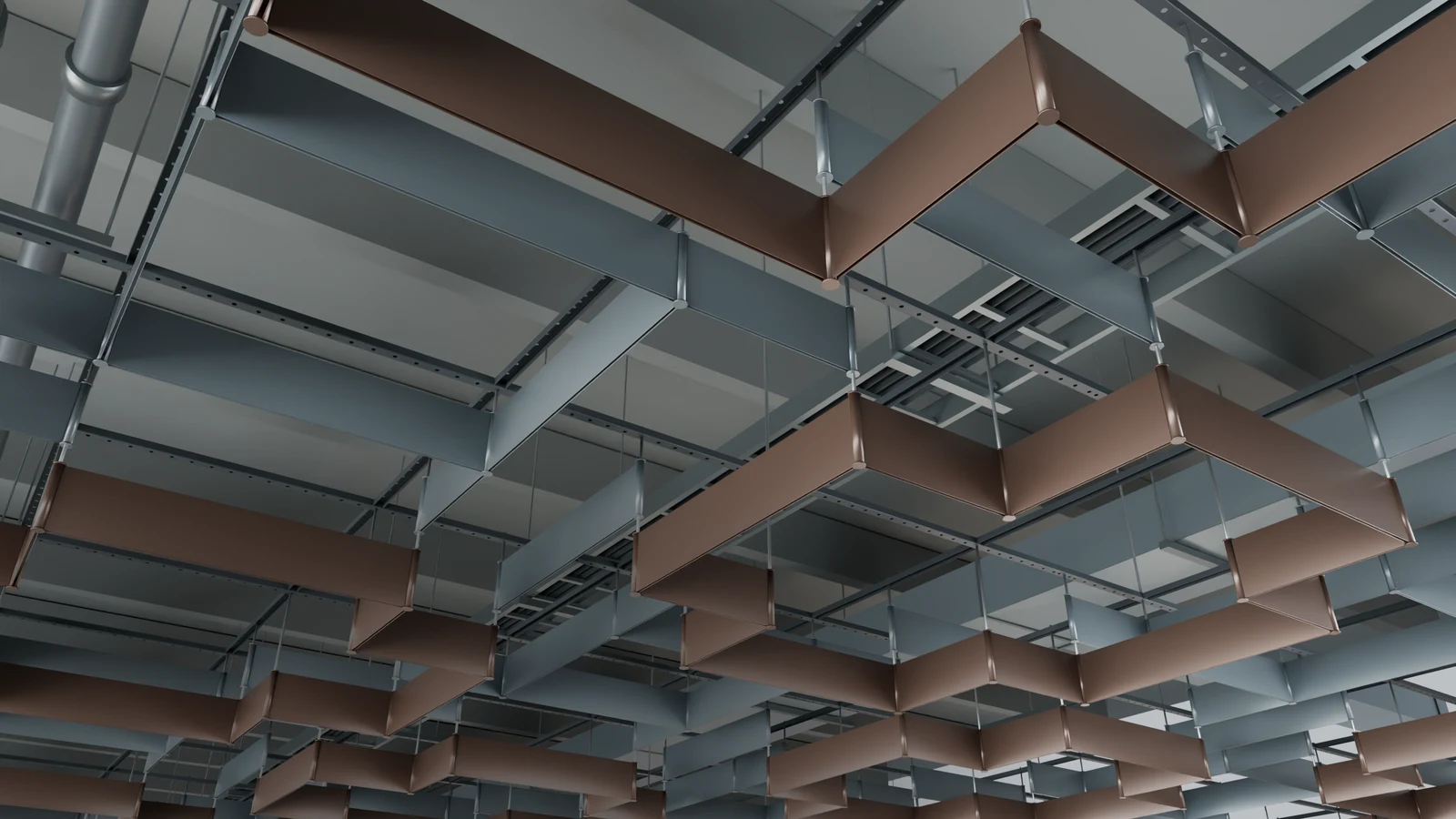
Reconfigurable ceiling or linear slat ceiling: what to choose for a modern public space
Compare the reconfigurable ceiling and the linear slat ceiling: differences in installation, manufacturing time, access to communications, design and operation in public spaces.

Reconfigurable ceiling or linear slat ceiling: which ceiling is more practical for a public object
When choosing a ceiling system for a commercial space, it is important to consider not only the appearance, but also how the structure will behave in daily operation.
Linear slat ceiling have long been used in interiors due to linear geometry and neat appearance, but modern requirements for access to utilities, speed of installation and architectural adaptability are increasingly making it possible for the interiors to be more flexible. reconfigurable ceiling A more flexible solution.
What is the difference between a linear slat ceiling and a reconfigurable ceiling?
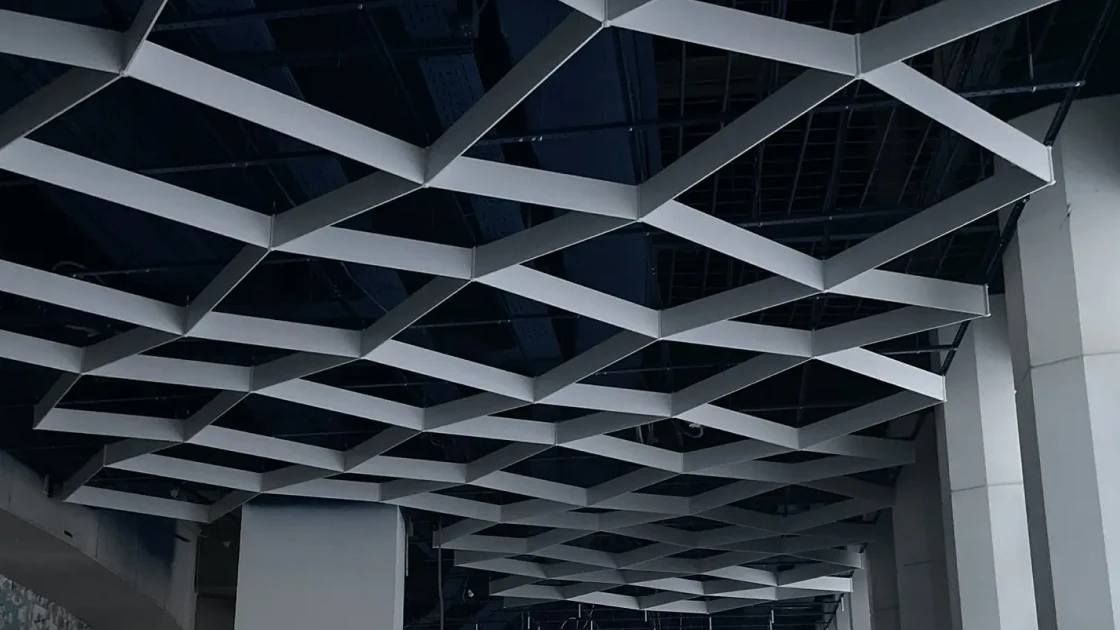
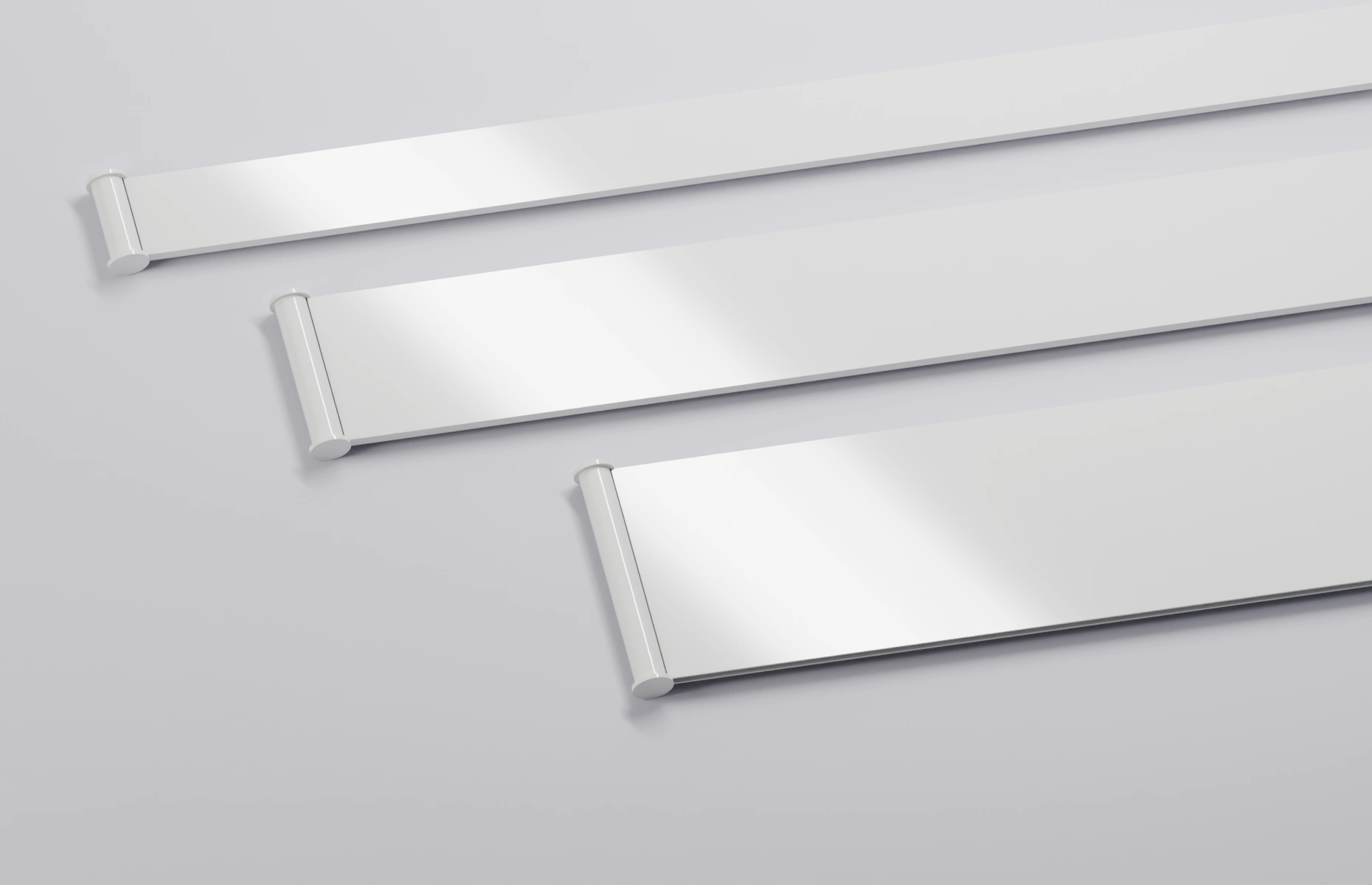
The linear slat ceiling is built on linear aluminium elements of a fixed design.
This gives a neat rhythm of the ceiling, but during operation there are restrictions:
- Access to communications requires partial dismantling.
- Change in the ceiling pattern is associated with the replacement of elements;
- Maintenance of individual areas takes more time.
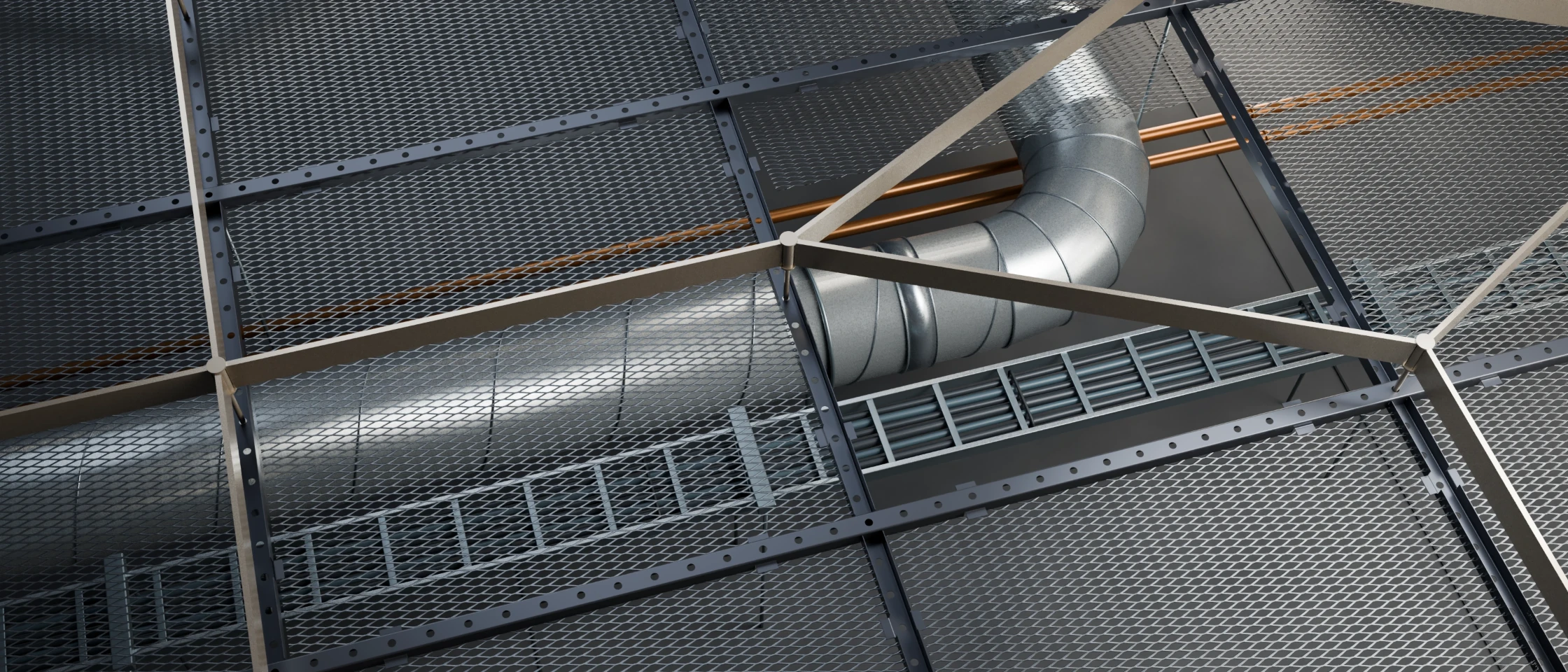
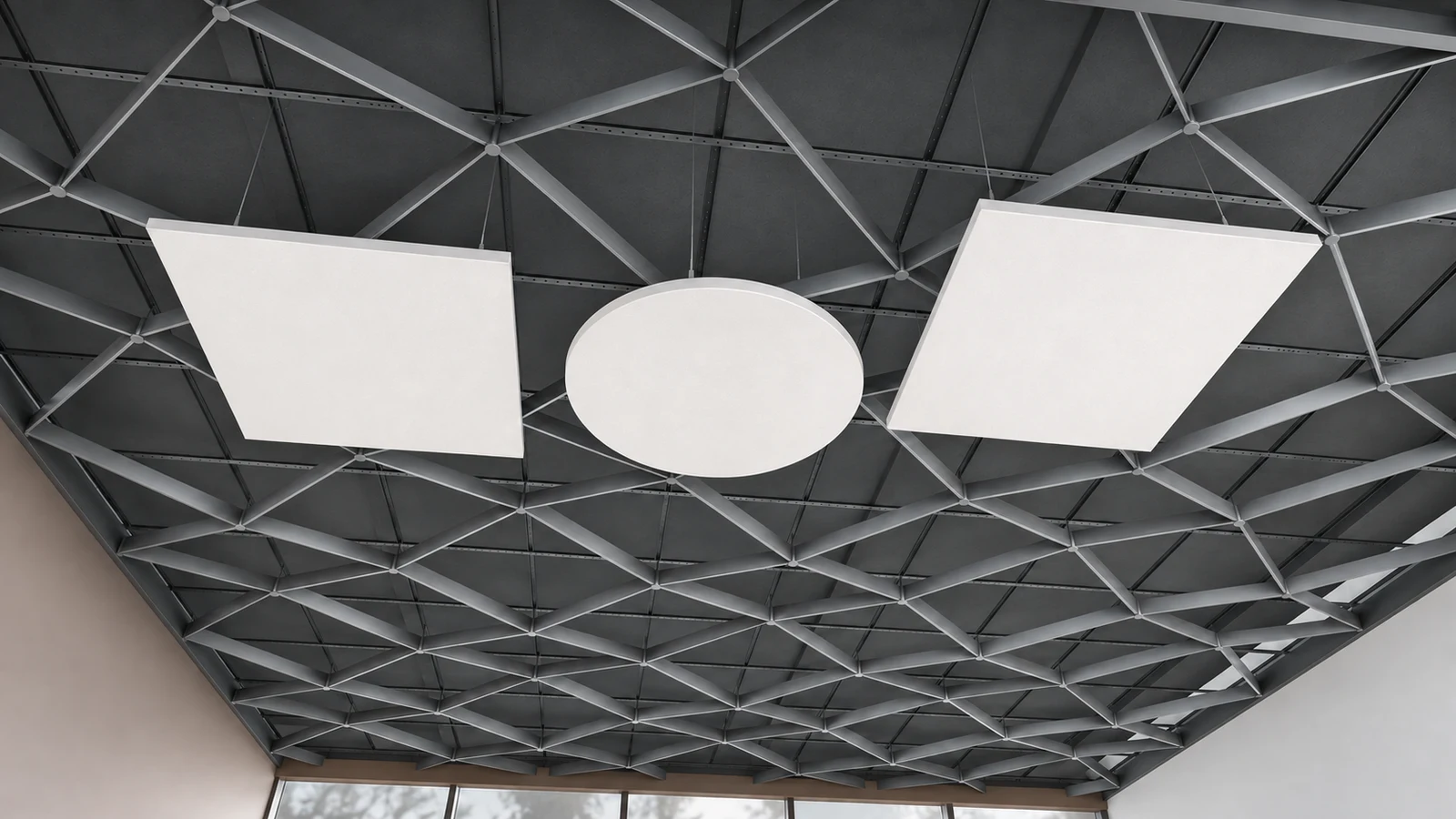
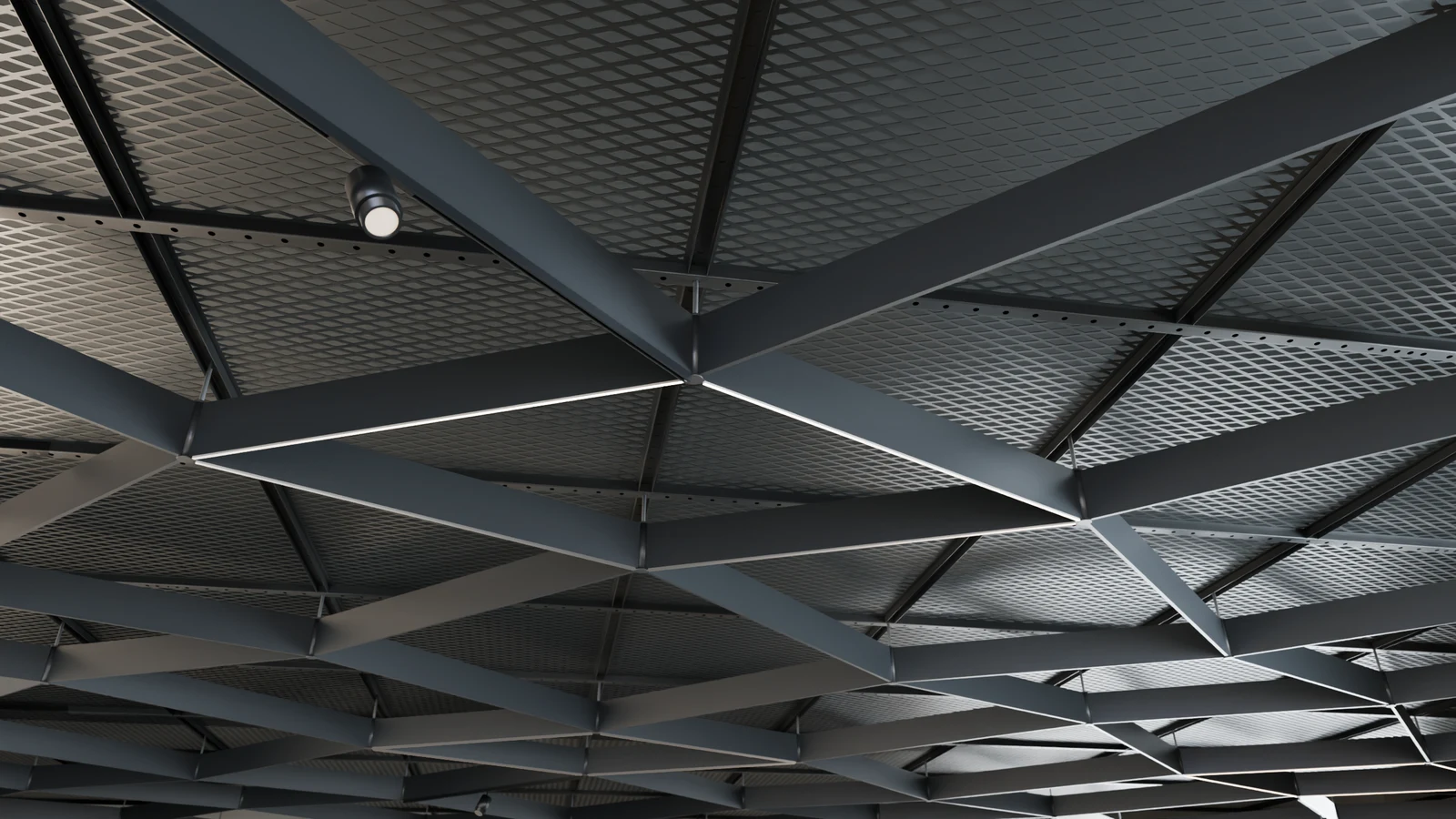
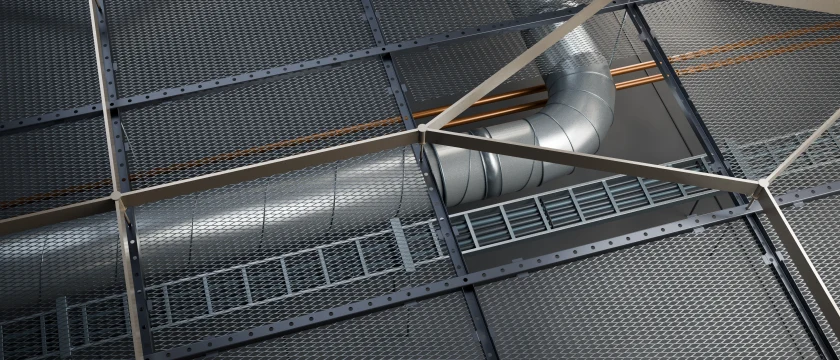
The reconfigurable ceiling allows you to open the desired areas without disassembling the entire system.
The ability to change the design without additional investment
For modern objects, the interior is often updated.
At the linear slat ceiling, any changes are associated with:
- replacement of part of the elements;
- selection of a new profile;
- additional editing.
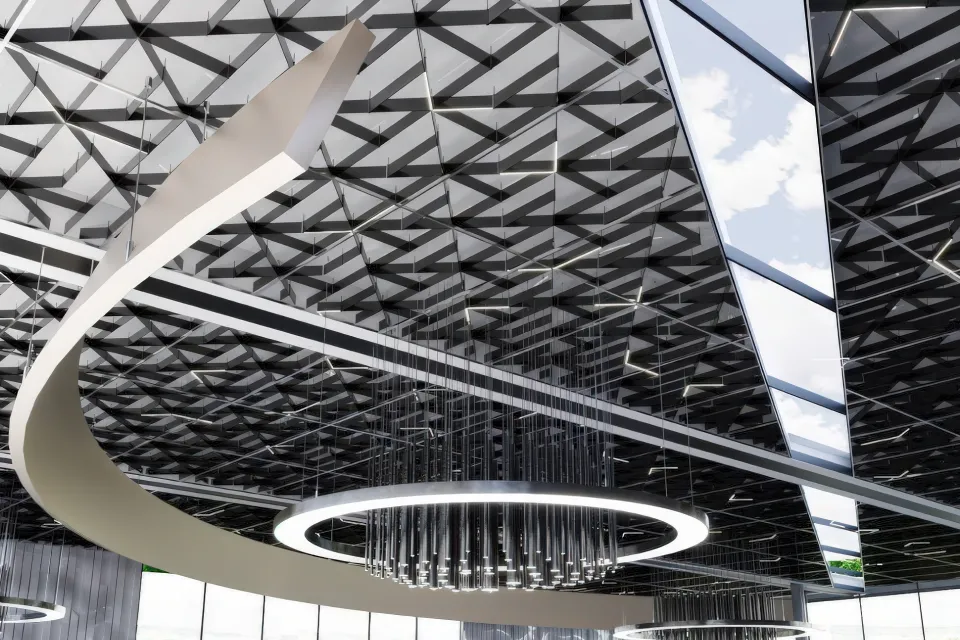
In a reconfigurable ceiling, some configurations can be changed within the existing system without completely replacing the structure.
This is particularly important for:
- shopping-place
- office spaces
- community
- commercial
Access to lighting and engineering systems
Today, the ceiling must work together with engineering.
The reconfigurable ceiling allows:
- lighting
- switch off
- connect new communications
- upgrade equipment
In a rack system, such operations usually require more time.
Speed of installation: where the difference is most noticeable
According to the practice of large facilities, the reconfigurable ceiling can significantly reduce the installation time.
The reason is simple:
- fewer operations during assembly
- more convenient modular logic
- faster service access
In large areas, this becomes especially noticeable.
Manufacturing time and launch of the facility
For construction projects, delivery times directly affect the commissioning of the facility.
In complex rack solutions, fabrication often takes longer due to the number of elements.
The reconfigurable ceiling adapts faster to the project and allows you to quickly go to the installation.
Service life and operational sustainability
If the ceiling opens regularly, the classical system loses its geometry more quickly.
The reconfigurable ceiling is designed for multiple installation and dismantling without loss of characteristics.
Therefore, at a long distance, the system shows a more stable operation.
When the linear slat ceiling remains a justified solution
Linear slat ceiling is a good choice if:
- linear pattern
- Engineering services are rarely available
- The interior is built around strict geometry
When the reconfigurable ceiling objectively wins
If the object requires:
- Continuous access to communications
- design
- high-speed
- Adaptation to future changes
The reconfigurable ceiling is becoming a more modern solution.